

- Mediavine
How to Scale Your Publishing Business Without Breaking What Works
4 min read
•
•
Scaling is one of the most misunderstood concepts in digital publishing.
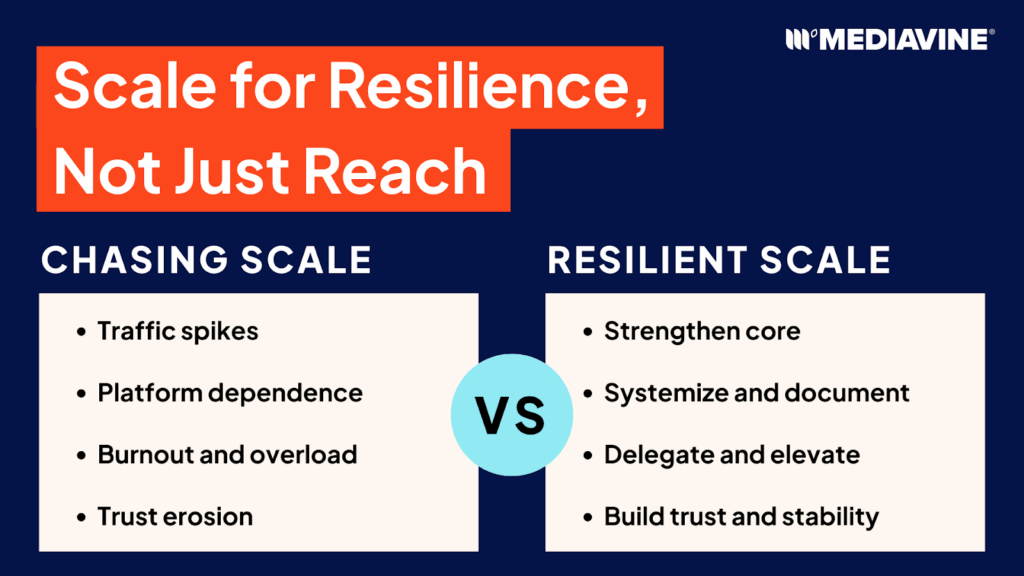
It’s often framed as a race toward more traffic, more platforms, and more revenue streams. But the publishers who last, the ones who grow stronger through algorithm shifts, platform changes, and economic pressure, scale differently.
They don’t just chase size; they build resilience.
True scale isn’t about doing more. It’s about reinforcing what already works to support greater demand, higher expectations, and long-term growth.
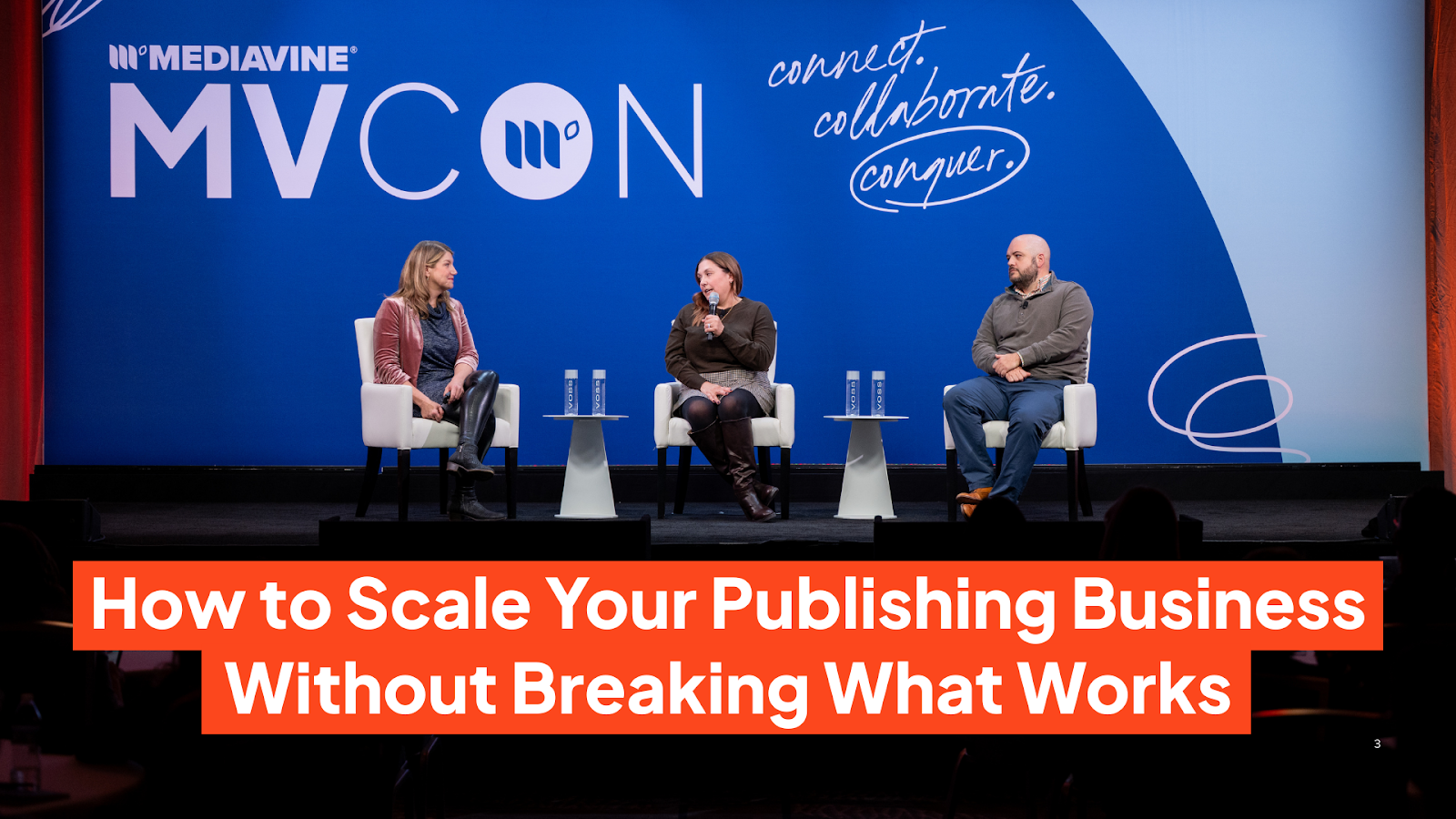
At MVCon, Dorothy Kern and Don Miner shared how publishers can scale effectively without sacrificing trust, focus, or momentum.
Step 1: Stabilize the Core Before You Expand
Scaling begins the moment your audience depends on you.
Not when traffic hits a milestone.
Not when revenue spikes.
But when readers expect you to show up consistently and notice when you don’t.
That expectation changes what comes next.
Before expanding, publishers must reinforce the foundation:
- Your most relied-on content formats
- Your publishing cadence
- Your site performance and reliability
- Your core value proposition
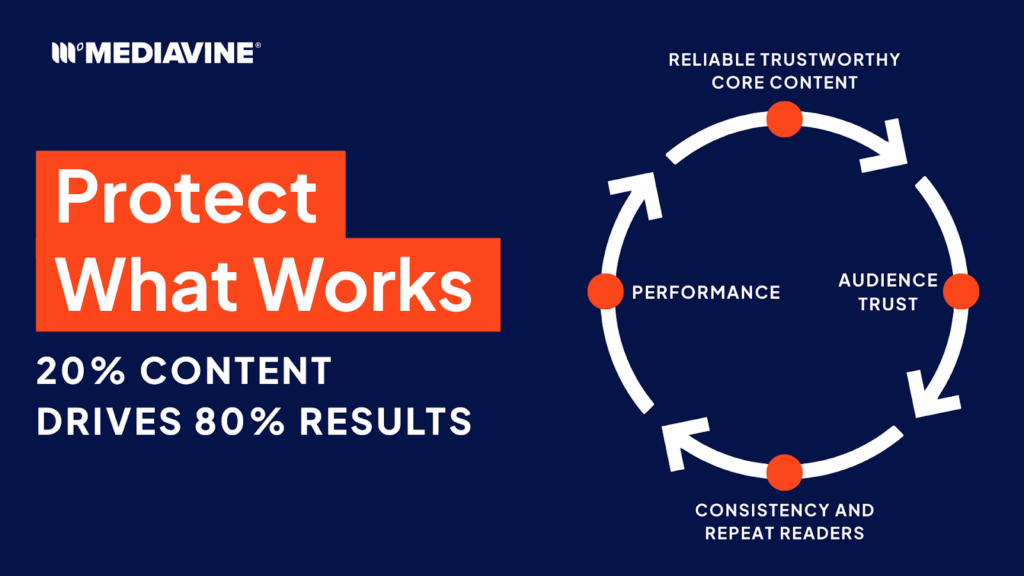
If your site disappeared tomorrow and readers would feel the loss, you’re already operating at scale. The priority now is protecting that trust.
Action:
Identify the 20% of your content that delivers 80% of audience value, and strengthen it before adding anything new.
Step 2: Treat Time as the First Growth Investment
Early-stage scaling isn’t capital-intensive; it’s time-intensive.
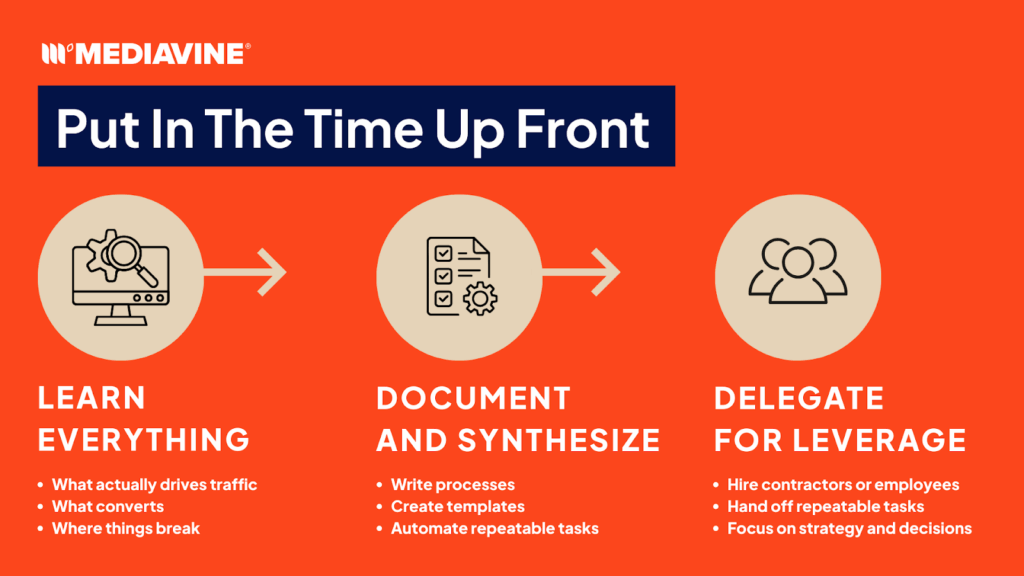
Many of the strongest publishing businesses were built by people who learned the entire operation, including content, SEO, monetization, tech, and audience behavior, before delegating it.
That phase isn’t inefficiency. It’s how you learn what actually moves the needle.
You can’t scale what you don’t understand. And you can’t delegate decisions you’ve never had to make yourself.
Action:
Before outsourcing, document:
- How content gets created
- How performance is evaluated
- Where friction slows growth
This knowledge becomes leverage later.
Step 3: Treat Burnout as a Signal, Not a Failure
Burnout isn’t a personal failing. It’s a signal your systems need attention. When energy drops, performance usually follows. Not immediately, but inevitably.
Publishers who scale successfully pay attention to:
- Tasks they consistently avoid
- Formats that drain more than they return
- Initiatives maintained out of fear instead of value
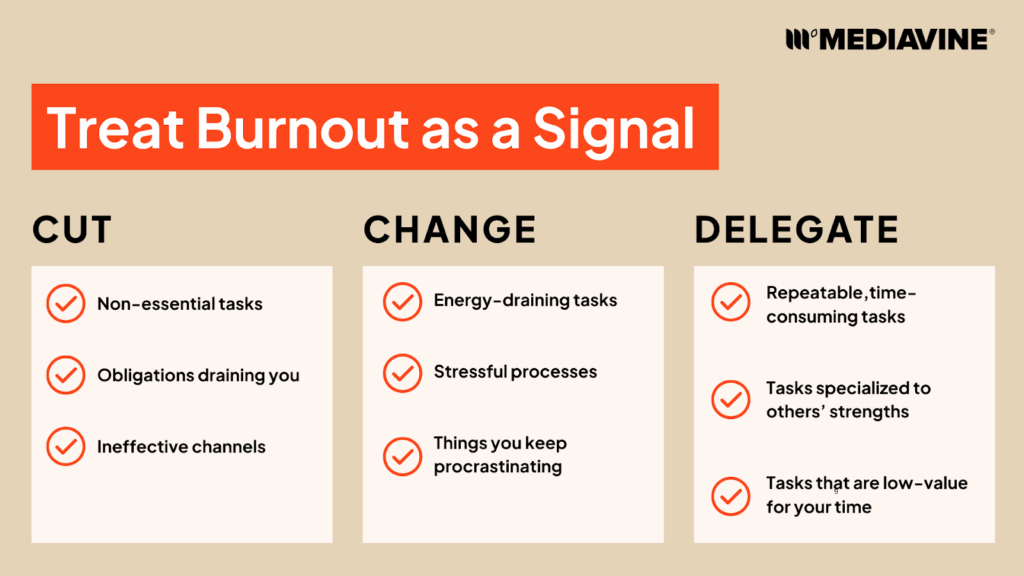
One of the biggest scaling mistakes isn’t pivoting too fast. It’s waiting too long.
Action:
Audit where your energy goes each week.
If something consistently drains momentum without driving results, it’s a candidate for change or removal.
Step 4: Delegate to Protect Momentum, Not Just Output
Eventually, effort stops being a bottleneck, and energy becomes the constraint.
Five-minute tasks pile up and compound into hours. Small responsibilities stack and quietly erode strategic focus.
At a certain point, scaling requires a mindset shift: if a task doesn’t require your judgment, voice, or expertise, it’s probably a good candidate for offloading.
Delegation isn’t about doing less. It’s about preserving capacity for decisions that actually move the business forward.
Action:
Start with one recurring task that:
- Happens weekly
- Doesn’t require founder-level input
- Interrupts higher-value work
Offload it completely.
Step 5: Hire for Leverage, Not Cost Control
Hiring is one of the most consequential scaling decisions a publisher makes, and one of the easiest to get wrong.
Cutting corners on critical roles often costs more and creates more work in the long run through increased oversight, corrections, and friction.
Cutting corners on critical roles often costs more due to:
- Increased oversight
- More corrections
- Slower output
- Constant friction
The goal isn’t “cheaper labor.” The goal is to hire effectively.
Effective hiring requires clarity:
- Clear responsibilities
- Documented processes
- Defined outcomes
Without that, even great talent can get stuck.
Action:
Before hiring, answer three questions:
- What outcome does this role own?
- How will success be measured?
- What processes already exist to support them?
If you can’t answer those, you’re not ready to hire yet. Focus on stabilizing the system first.
Step 6: Diversify Only After Trust Is Established
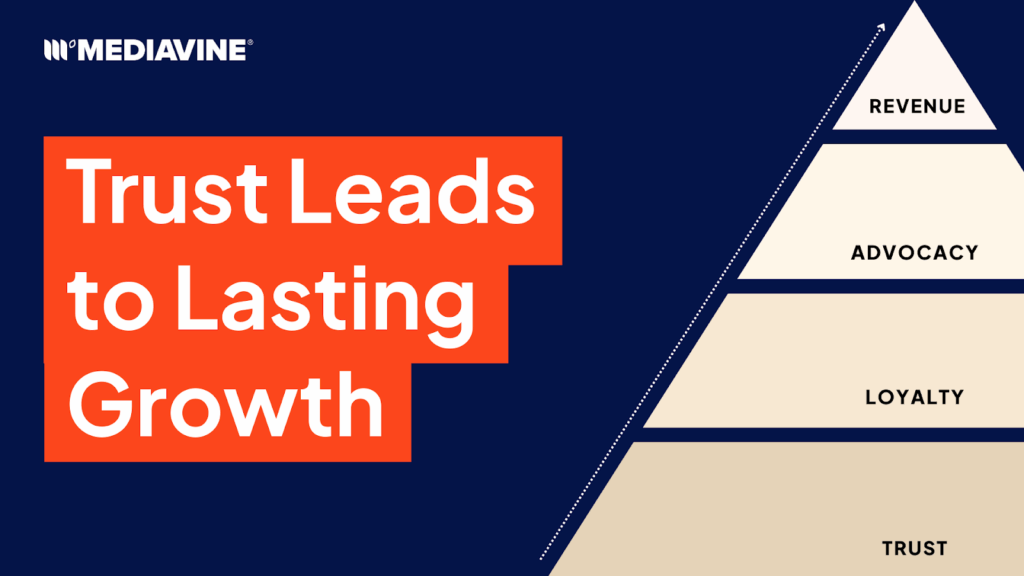
Diversification isn’t a rescue strategy, but a trust exercise.
New revenue streams work best when audiences already:
- Understand your value and what you do
- Trust your perspective
- Feel invested in your success
Adding products, subscriptions, or platforms without that foundation often creates noise instead of growth.
Action:
Before diversifying, strengthen the connection:
- Increase founder visibility
- Clarify why monetization exists
- Reinforce the value readers already rely on
When trust is high, diversification becomes additive, not distracting.
Step 7: Make the Business More Human, Not More Abstract
Technology is accelerating, AI is reshaping discovery, and platforms will continue to change.
What doesn’t scale automatically is trust.
Publishers who stay visible, who put real perspective, experience, and voice into their content, build something defensible that algorithms can’t replicate.
Because people don’t advocate for brands, they advocate for people they trust.
Action:
Audit your content presence:
- Is it clear there’s a real decision-maker behind it?
- Does your audience know why you make the choices you do?
Visibility compounds trust. Trust compounds growth.
Step 8: Choose Growth That Strengthens the Relationship
Not all revenue is good revenue.
Every monetization decision signals priorities to your audience. Growth that undermines trust weakens your business, even if short-term numbers improve.
The strongest publishers scale by expanding impact first. Revenue follows.
Action:
Pressure-test new opportunities with one question: does this strengthen or strain the relationship with our audience?
If the answer isn’t clear, pause.
Scale What’s Proven, Not What’s Trending
Effective scaling doesn’t require reinvention. It requires discipline.
The publishers who grow strongest over time tend to:
- Protect what works
- Evolve intentionally
- Make decisions grounded in trust, not urgency
Scaling isn’t about becoming something new; it’s about reinforcing what already earns attention, loyalty, and results.
That’s how publishing businesses grow bigger and better at the same time.

FAQ: Scaling Your Business in Today’s Creator Economy
What is the first sign it’s time to scale?
When other people depend on your work, not just when revenue increases.
How do I know when to pivot?
When burnout sets in, results stagnate, or you’re maintaining something out of fear instead of value.
Should I hire a contractor or an employee first?
Contractors are best for defined tasks. Employees are better when you need long-term investment and ownership.
Is diversification required to survive?
Not immediately, but audience trust is. Diversification works best when your audience wants to support you.
How important is personal branding now?
Critical. Audiences want proof there’s a real human behind the content.
Does scaling always mean growing a team?
No. It means growing intentionally. Sometimes staying small is the smartest move.
About the author

Share this page

The Mediavine Difference
You build the content that defines industries. We build the monetization that powers it.