

- Mediavine
How Publishers Win in the Next Era of the Internet
4 min read
•
•
Search is changing. Traffic is less predictable. Advertisers are getting more selective. Platforms are pulling value inward. None of this is new. What’s new is the speed at which it’s happening.
The publishers who win next are not chasing loopholes or waiting for the next algorithm update to fix things. They’re building durable businesses rooted in control, quality, and audience trust.
Here’s how to do that now.
1. Create Content AI Can’t Replace
If a page exists only to answer a basic question, AI can do that faster.
Quick answers, definitions, and formulaic SEO content are no longer reliable traffic drivers. Not because content doesn’t matter, but because AI handles that instantly, and users accept that.
What still wins:
- Perspective
- Experience
- Judgment
- Depth
- Voice
If a reader could get the same value from a chatbot response, that content isn’t helping your business. It’s diluting it.
What to do:
- Audit your content for replaceability
- Prioritize content that explains why, not just what
- Write for people who want context, not just quick answers
- Build content that naturally leads to the next question, not the exit
This shift is not about writing less. It is about writing better and more intentionally
2. Build for Audience Ownership, Not Rented Traffic
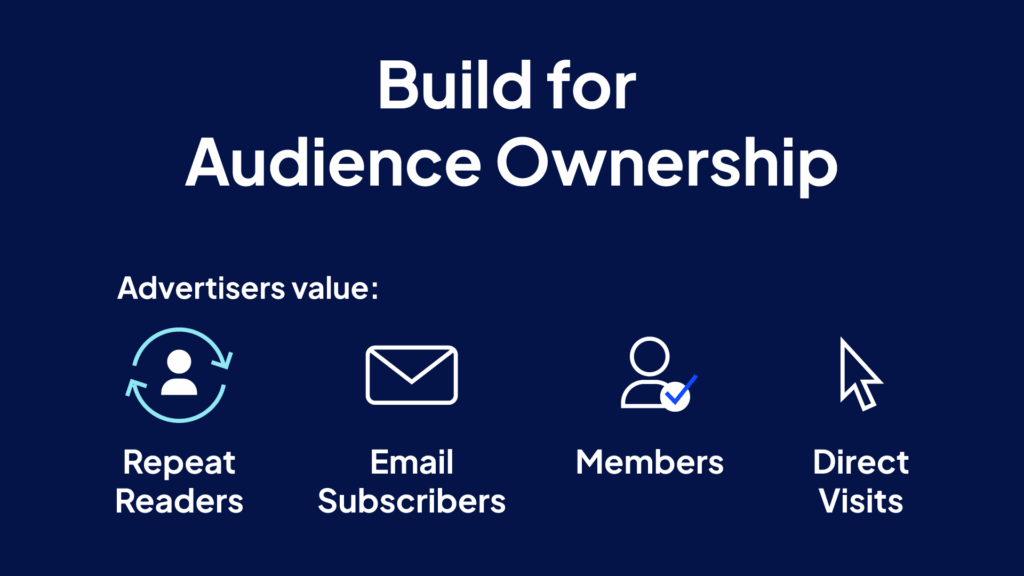
Traffic from platforms is temporary. Audience relationships last.
Search, social, and discovery tools change constantly. Direct relationships do not. The only audience you truly control is the one that chooses to come back.
That includes:
- Direct visits
- Email subscribers
- Members
- Repeat readers
Advertisers value this because it signals trust and engagement. And AI cannot replicate a real relationship with a real audience.
What to do:
- Treat your website as a destination, not a landing page
- Invest in newsletters that bring readers back to your site
- Know exactly who your audience is and why they return
- Build content that rewards loyalty, not just clicks
Community is not just a buzzword. It is leverage.
3. Optimize Ad Experience to Protect Long-Term Revenue
The ad industry is drawing a harder line against cluttered, low-quality experiences, and advertisers are actively avoiding sites that overload pages with ads. They are rewarding publishers who deliver fewer, more viewable, higher-quality placements.
This is not theory or a “someday” trend. It is already affecting demand and CPMs.
MFA classification is getting stricter. That label can cost access to premium budgets.
What to do:
- Turn on Mediavine’s Optimized Ad Experience
- Think in terms of revenue stability, not short-term RPM spikes
- Treat ad experience as a growth driver, not a tradeoff
The future of ad monetization favors premium environments, not maximum volume.
4. Diversify Without Abandoning Ads
Ads are still a foundational source of revenue for most publishers. That does not mean ads should be the only revenue stream. Publishers who depend on a single traffic source and one monetization method are exposed to volatility they can’t control. Strong businesses don’t ditch ads; they layer revenue so the entire model isn’t exposed.
What to do:
- Use your site to support additional monetization paths
- Explore memberships, education, digital products, or paid communities
- Treat ads as one pillar, not the entire structure
- Keep your website as the central hub for everything you build
Diversification is not about leaving ads behind. It is about reducing risk.
5. Strengthen Brand Authority Before AI Decides for You
AI systems learn from authority signals. Brands know this. Advertisers know this.
The next phase of monetization will reward publishers whose voices shape perception. Brands will need trusted publishers to validate products, categories, and expertise.
Authority is becoming currency.
What to do:
- Be explicit about your niche, what you’re known for, and your point of view
- Publish content that signals expertise, not neutrality
- Build a recognizable voice across platforms
- Prioritize credibility over scale
Publishers who establish authority now will be harder to replace later.
The Reality Check
The internet is not collapsing. It is consolidating around quality, trust, and control.
AI accelerates this shift. Advertisers reinforce it. Platforms expose the cost of ignoring it.
Publishers who adapt will not just survive; they will gain leverage in a more disciplined, premium ecosystem.
Frequently Asked Questions
Is SEO dead?
No. SEO is changing. Search is no longer the sole growth engine. Publishers should treat it as one channel, not the entire strategy.
Should publishers stop monetizing with ads?
No. Ads remain a critical revenue source. The shift is toward better ad experiences and premium demand, not abandonment.
Will AI reduce traffic permanently?
Some traffic, yes. Especially transactional or “quick” queries. That’s why audience loyalty and direct relationships are more valuable than ever.
Are newsletters the future of monetization?
Newsletters are a relationship channel, not a replacement for websites. Their value is in driving repeat engagement and owned traffic.
What matters more now: scale or trust?
Trust. Scale without trust is increasingly discounted by advertisers and platforms alike.
Can small publishers still win?
Yes. Smaller publishers with strong voices, loyal audiences, and premium experiences are well-positioned for this next phase.
About the author

Share this page

The Mediavine Difference
You build content that defines industries. We build the monetization that powers it.