

- Mediavine
How Publishers Can Pivot and Adapt Without Waiting for a Crisis
4 min read
•
•
The publishing industry did not gradually change. It recalibrated fast.
Search is more volatile. Platforms shift priorities without warning. AI has made content saturation a new hard reality. And the strategies that drove yesterday’s growth are no longer guaranteed to protect tomorrow’s revenue.
But the publishers who are winning right now didn’t panic. They pivoted early and with intention.
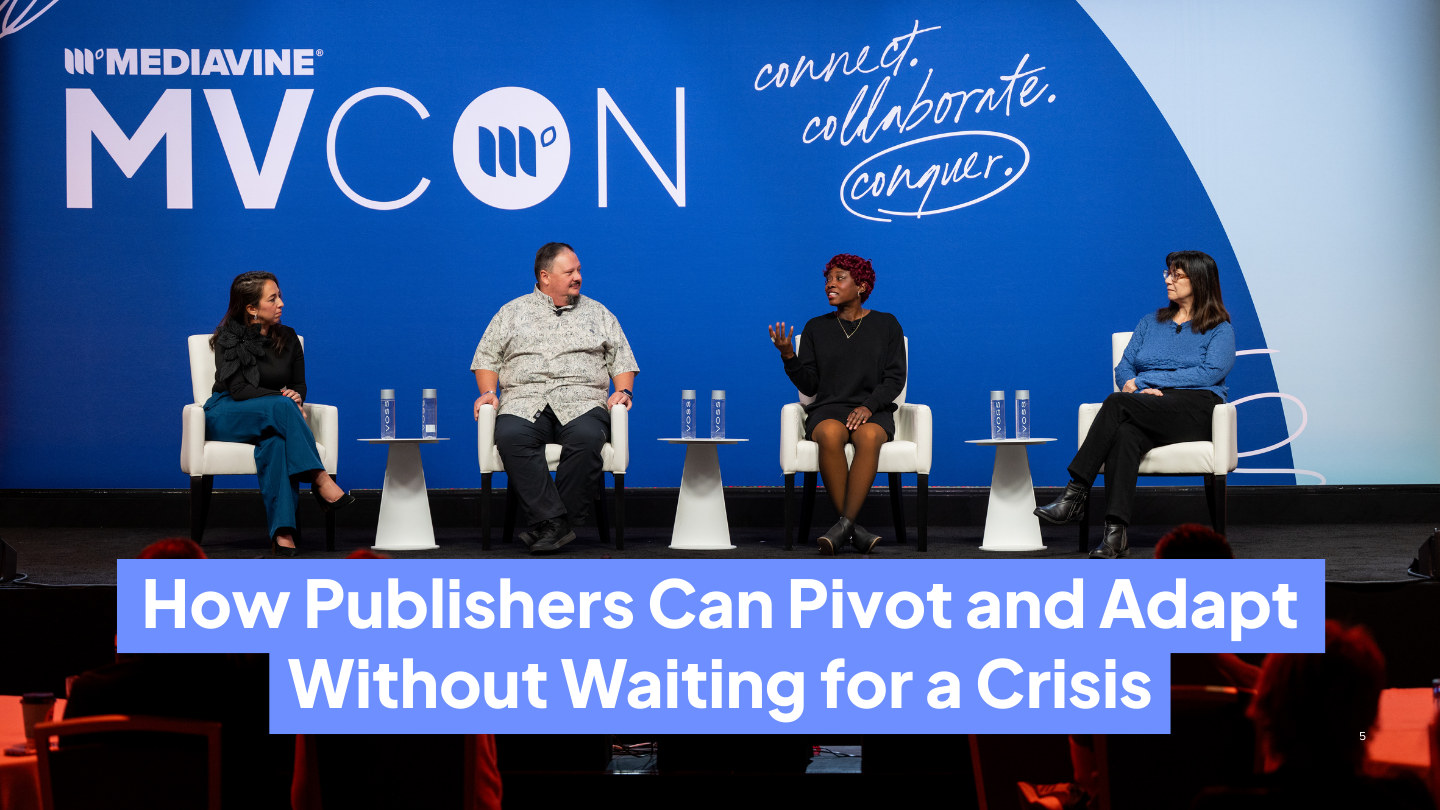
At MVCon, Tanya Harris, Anne Moss, and Paul Gowder shared how they rebuilt their businesses to stay resilient in an environment defined by constant change. While their paths were different, their conclusion was the same:
Long-term success belongs to publishers who own their relationships, define their value, and adapt to data demands.
This is how to do exactly that.
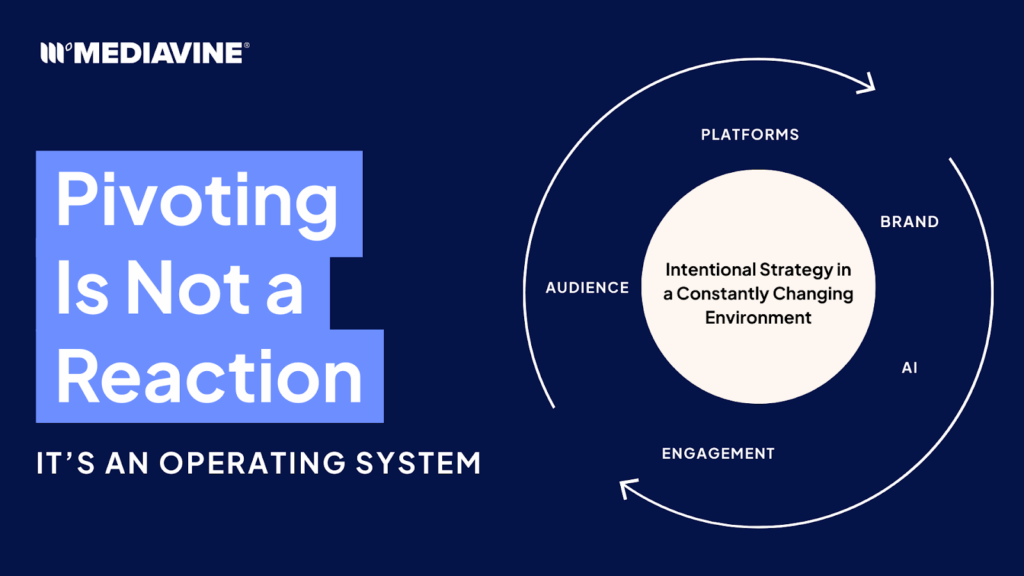
Step One: Stop Optimizing for Systems You Don’t Control
For years, growth had a rhythm. It was built on predictability. Keywords shaped content calendars. Algorithms rewarded consistency. Scale came from volume.
That era is over.
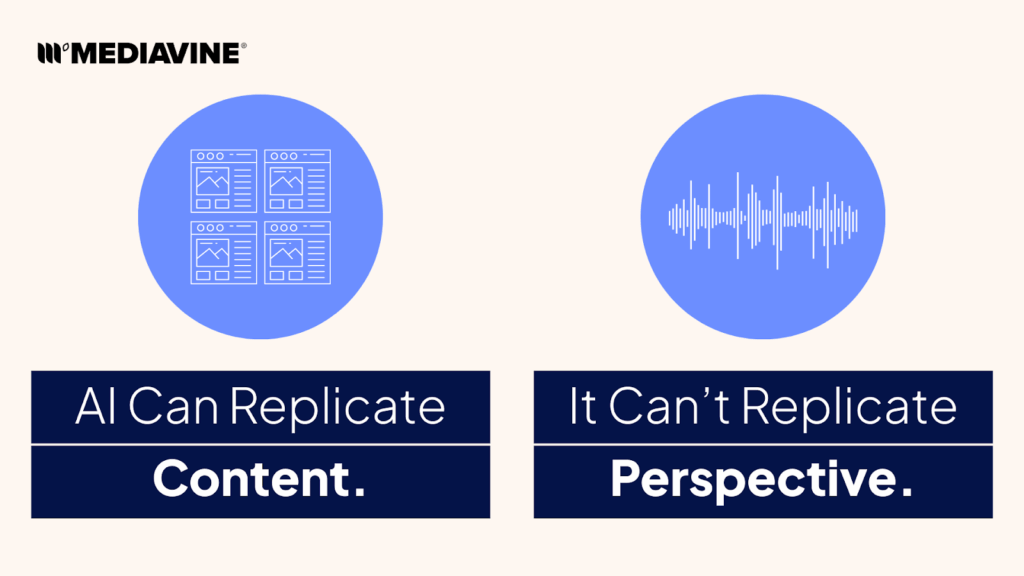
When AI made informational content instantly reproducible, the biggest weakness of algorithm-first strategies was exposed: content built only to satisfy systems is easy to replace. Content built for humans is not.
What to do now:
- Audit your content strategy and identify where it relies exclusively on search visibility
- Reduce dependency on long-term SEO-only content plans that assume tomorrow will look like yesterday
- Prioritize relevance, voice, and context over volume for volume’s sake
Key takeaway: Algorithms will always change. Human trust compounds.
Step Two: Build Relationships, Not Reach
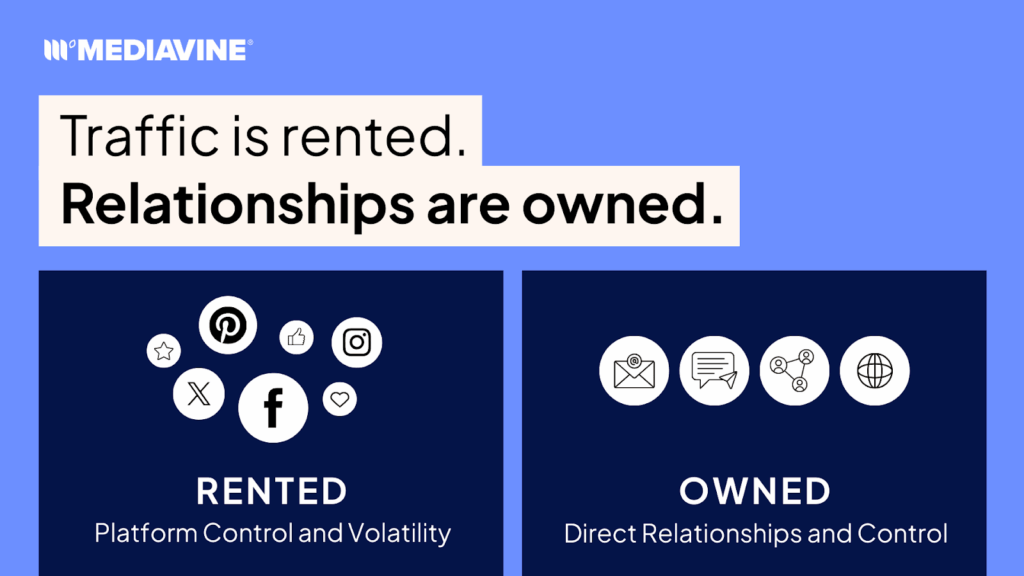
Traffic isn’t an asset, but relationships are.
As platforms removed features and deprioritized community-building tools, the risk of relying on rented land became impossible to ignore. Publishers who owned direct relationships moved faster and with more confidence.
Email proved to be the most durable infrastructure. Not as a “send-to-everyone” channel, but as a segmented, deliberate system designed around audience intent.
What to do now:
- Treat email as a core business asset, not a supporting one
- Segment your audience by interest and behavior, not just size
- Build your list like a network of smaller communities, not a single audience
- Monetize through alignment, not interruption
Key takeaway: If you don’t own the relationship, you don’t own the business.
Step Three: Make Your Brand Impossible to Separate from You
In an AI-saturated landscape, anonymity is a liability. Traffic alone doesn’t create loyalty, but recognition does.
Publishers who leaned into personal brand –clearly, intentionally, and consistently –created differentiation that algorithms can’t replicate. Because your audience doesn’t connect with “content.” They connect with a voice.
What to do now:
- Clarify what your brand stands for and why it’s memorable (and what you’ll never be)
- Bring voice, perspective, and lived experience to the forefront
- Evaluate success by recognition and response, not clicks alone
Key takeaway: Authenticity isn’t a trend; it’s a competitive advantage.
Step Four: Learn to Recognize the Signals Early
Pivots rarely start with a single data point. They start with patterns.
The strongest publishers didn’t wait for revenue loss to justify change. They closely watched behavior from both audiences and platforms and adjusted early.
What to watch:
- Repeated audience questions (especially ones that keep coming back)
- Subtle platform feature removals or UX shifts
- Changes in how content is discovered, shared, or recommended
- Drops in engagement quality, not just volume
What to do now:
- Track qualitative feedback alongside analytics
- Pay attention to emotional responses, not just performance metrics
- Test emerging tools early to understand the impact; don’t avoid it
Key takeaway: The best pivots happen before revenue drops.
Step Five: Redefine What Engagement Means
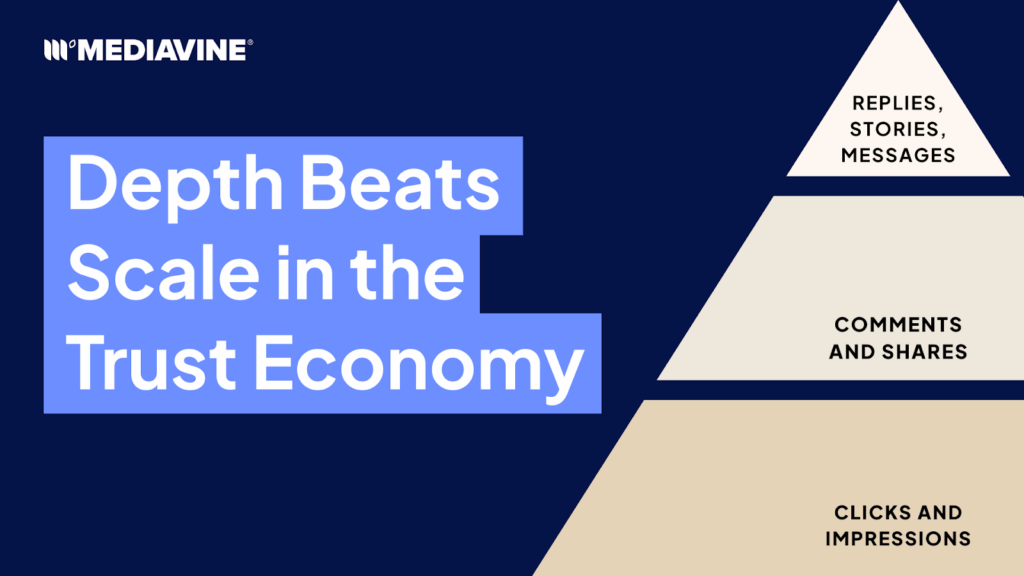
Clicks and impressions still matter, but they no longer tell the full story.
High-quality engagement is harder to scale and significantly more valuable. It signals trust, relevance, and longevity.
What meaningful engagement looks like:
- Replies that reference personal experiences and stories
- Comments that mirror your language
- Messages that show emotional connection or loyalty
What to do now:
- Measure success by response, not just reach
- Build initiatives based on repeated audience feedback
- Let real conversations guide strategic decisions
Key takeaway: When your audience talks back, you gain clarity that analytics can’t provide.
Step Six: Use AI to Accelerate, Not Replace, Human Value
AI is not the threat. Misuse is.
The publishers who adapted fastest treated AI as an assistant. A way to accelerate research, ideation, and workflow without outsourcing perspective.
What to do now:
- Use AI for brainstorming, refinement, and preparation
- Protect your voice and editorial judgment
- Be transparent and ethical in how AI supports your process
Key takeaway: AI should amplify human creativity, not replace it.
Step Seven: Normalize Experimentation and Failure
Not every test will work. That’s the point.
Platforms will stall, tools will underperform, and some initiatives will flop completely. That doesn’t mean you did it wrong. It means you’re doing what publishers have to do now: learn fast. However, the real risk is standing still.
What to do now:
- Test with clear criteria for success or exit
- Accept failure as part of progress that gives you useful data, not a warning sign
- Build experimentation into your strategy, not around it
Key takeaway: Standing still is riskier than testing.
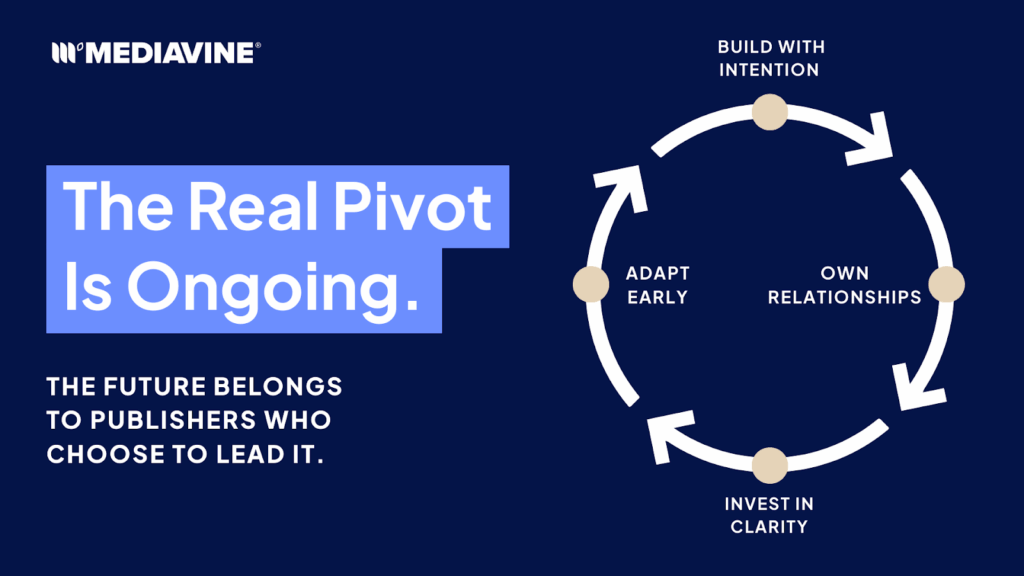
The Real Pivot Is Ongoing
The publishers who thrive next won’t be the ones chasing every update. They’ll be the ones who:
- Build with intention
- Own their relationships
- Invest in clarity, not comfort
- Adapt before disruption becomes mandatory
The pivot is not a moment, but a posture, and the future belongs to publishers who choose to lead it.
Frequently Asked Questions
What is the most important shift publishers should make now?
Prioritize direct audience relationships through email and community over platform-dependent traffic.
Is SEO still relevant?
Yes, but it should support a broader strategy rather than define it.
How important is personal branding?
Increasingly essential as content becomes more commoditized (easier to replicate and harder to differentiate).
Should publishers fear AI?
No. Understanding and using AI thoughtfully is far more valuable than avoiding it.
What platforms are safest to invest in?
Owned channels such as email lists and community platforms, where you control the relationship.
How do you know when it is time to pivot?
When audience behavior, platform features, or discovery patterns shift consistently, even if revenue hasn’t dropped yet.
About the author

Share this page

The Mediavine Difference
You build the content that defines industries. We build the monetization that powers it.