

- Mediavine
The GEO Playbook for Publishers
4 min read
•
•
What to Do Now to Win Visibility and Authority in the AI Search Era
AI search isn’t a trend to watch. It’s the operating system publishers are building on now.
Discovery no longer starts with ten blue links. It starts with an answer synthesized, summarized, and shaped by AI systems deciding which sources deserve to be trusted.
If your content isn’t shaping those answers, you’re invisible in the moments that matter. Generative Engine Optimization (GEO) is how publishers take control of that shift. Not someday, but right now.
At MVCon 2025, Evertune‘s Jaclyn Ranere laid out how GEO is reshaping discovery and why publishers who move now will influence how AI systems determine what gets surfaced. This guide focuses on execution: what to change, where to start, and how to build authority in the new space of AI-driven discovery.

1. Reset the Goal: Optimize for Influence, Not Clicks
Action: Audit your content strategy against one question: Would an AI system reuse this?
SEO trained publishers to chase rankings. GEO rewards publishers who shape conclusions.
AI systems don’t rank pages; they assemble answers. That means:
- Authority beats volume
- Clarity beats cleverness
- Consistency beats one-off wins
What to do this week:
- Identify your top 20 pages by traffic and engagement
- Flag the ones that don’t state a takeaway in the first two sentences
- Rewrite the introductions that don’t
If the point isn’t obvious immediately, AI won’t wait to find it.
2. Make Your Content Easy to Extract
AI systems favor content they can confidently reuse.
Action: Reformat for extractability.
Every high-performing page should include:
- A direct conclusion up top
- Clear subheads framed as real questions
- Lists, tables, or steps in every major section
- FAQs written in natural language
Quick checklist:
- Can this page be summarized without losing accuracy?
- Are key points stated declaratively, not implied?
- Could a list replace a paragraph?
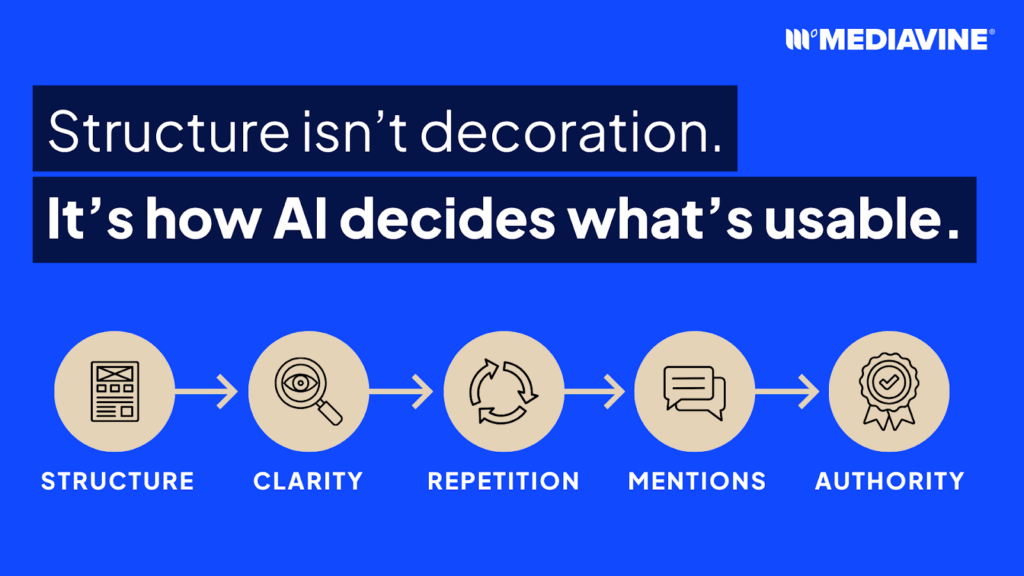
Structure isn’t decoration. It’s how AI decides what’s usable.
3. Upgrade What Already Works
You don’t need new ideas. You need sharper execution.
Action: Optimize existing winners before creating new content.
Start with content that already:
- Ranks on page one
- Drives meaningful time on page
- Serves a clear audience need
Then make it AI-ready:
- Update examples and data
- Add a “bottom line” section
- Break dense blocks into scannable sections
- Insert comparison tables or summaries
Rule: Recency signals credibility. Structure signals usefulness. Repetition across pages signals authority.
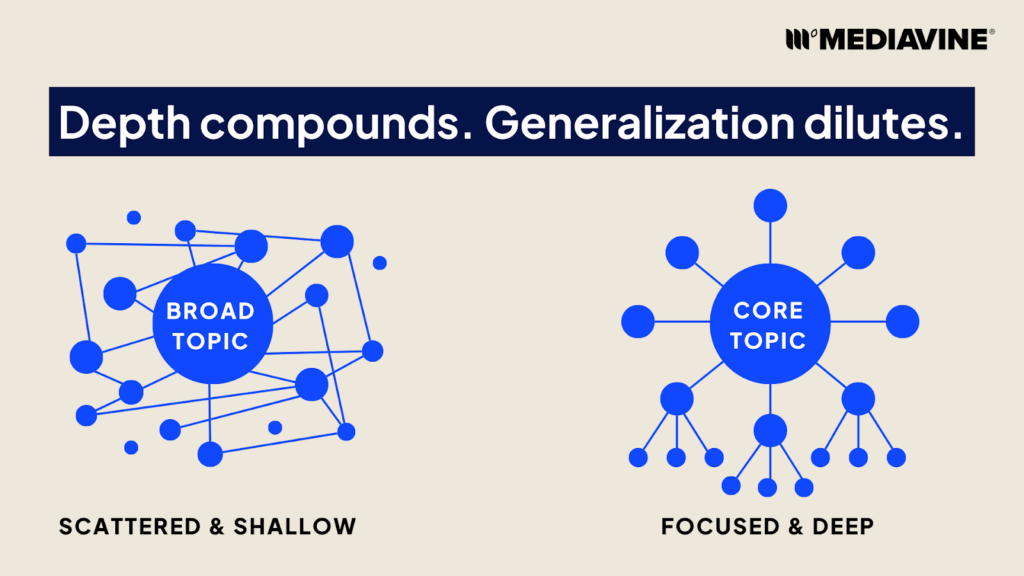
4. Build Topic Authority, Not Topic Sprawl
AI systems trust specialists.
Action: Narrow your focus and deepen coverage.
Choose 1–3 core topics where you can be definitive. Then build clusters around:
- Core problems your audience is solving
- Supporting questions and edge cases
- Comparisons and alternatives
- Objections and tradeoffs
What to stop doing:
- Chasing adjacent topics for volume
- Publishing thin “trend” content
- Covering everything at the surface level
Depth compounds. Generalization dilutes.
5. Treat Guest Publishing as Visibility Infrastructure
Links still matter. Mentions matter more.
Action: Shift guest content goals from backlinks to reinforcement.
AI systems learn through repetition across credible sources. When your perspective shows up consistently, it becomes trusted knowledge.
How to execute:
- Pitch opinionated, authoritative POVs
- Repeat your core framework across outlets
- Align language and conclusions with your on-site content
One article is exposure. Ten consistent mentions is authority.
6. Lead with Confidence, AI Is Listening
AI evaluates sentiment, certainty, and clarity.
Action: Remove hedging language.
Replace:
- “It depends” → “In most cases, the best approach is…”
- “You might consider” → “The most effective option is…”
This isn’t about exaggeration. It’s about leadership.
If your content sounds unsure, AI will look elsewhere.
7. Align GEO With Brand Opportunity
Brands are paying attention to how AI describes them, and who shapes that narrative.
Action: Position your publication as a source of understanding, not just exposure.
Publish content that:
- Defines categories
- Compares solutions
- Explains tradeoffs
- Sets standards
This is where publishers gain leverage. Authority travels further than traffic.
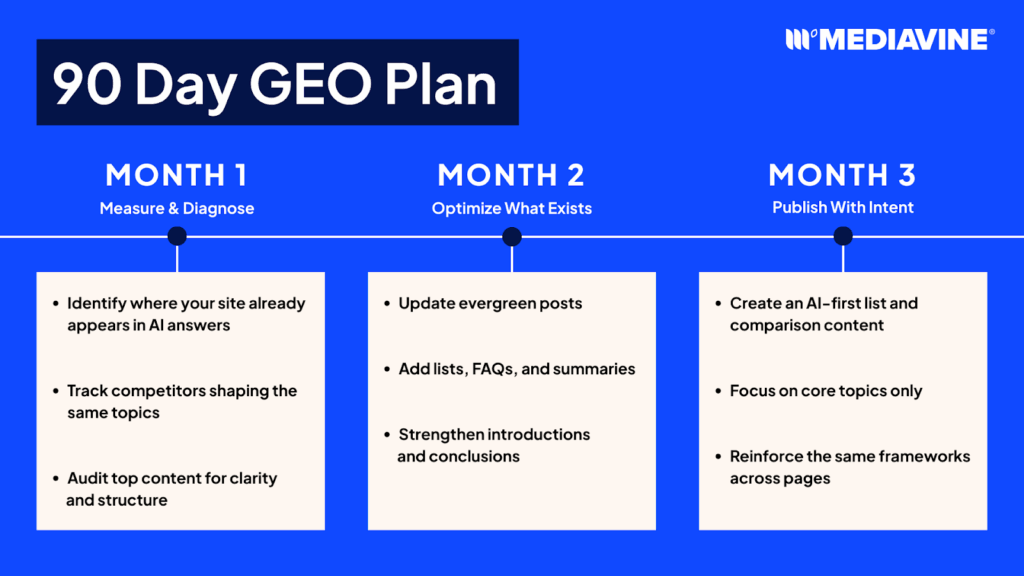
8. A 90-Day GEO Execution Plan
Month 1: Measure & Diagnose
- Identify where your site already appears in AI answers
- Track competitors shaping the same topics
- Audit top content for clarity and structure
Month 2: Optimize What Exists
- Update evergreen posts
- Add lists, FAQs, and summaries
- Strengthen introductions and conclusions
Month 3: Publish With Intent
- Create an AI-first list and comparison content
- Focus on core topics only
- Reinforce the same frameworks across pages
Progress comes from precision, not volume.
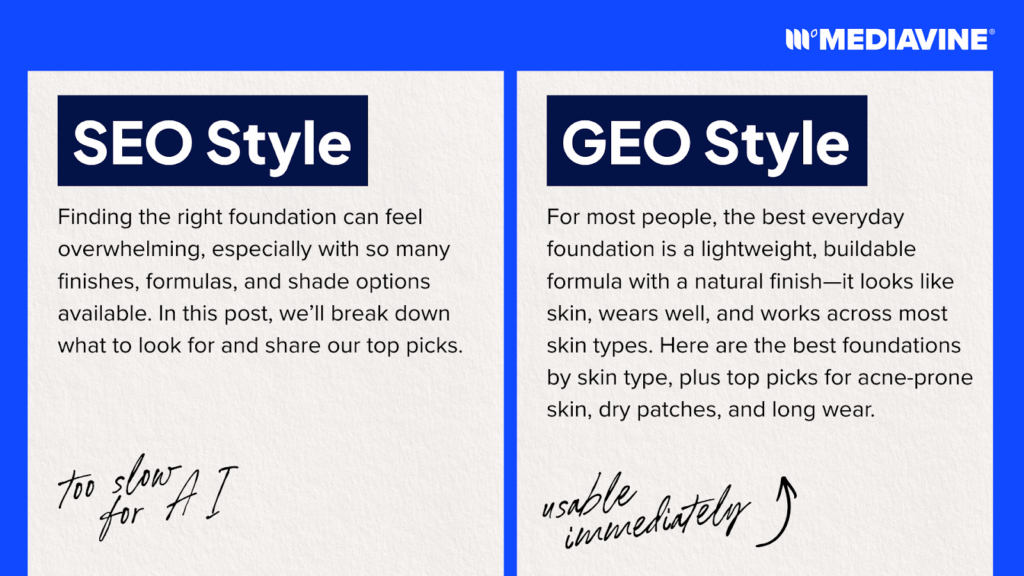
GEO vs. SEO: What It Actually Looks Like
SEO-style intro (too slow for AI):
“Finding the right foundation can feel overwhelming, especially with so many finishes, formulas, and shade options available. In this post, we’ll break down what to look for and share our top picks.”
GEO-style intro (usable immediately):
“For most people, the best everyday foundation is a lightweight, buildable formula with a natural finish—it looks like skin, wears well, and works across most skin types. Here are the best foundations by skin type, plus top picks for acne-prone skin, dry patches, and long wear.”
If the takeaway doesn’t show up fast, AI won’t dig for it.
Bottom Line
Publishers aren’t being replaced by AI. They’re being filtered. Those who adapt now won’t just survive the shift, they’ll define it.
GEO isn’t about chasing algorithms. It’s about building authority that systems trust, reuse, and amplify.
That’s the advantage publishers still own, if they act on it.
FAQ
Is GEO replacing SEO for publishers?
No. GEO complements SEO by optimizing content for AI inclusion rather than clicks alone.
Does AI penalize duplicate content?
Not yet, but originality already performs better and will matter more over time.
Is recency important for AI search?
Yes. Updates signal relevance and reliability.
Do lists and FAQs really help?
Yes. They make content easier for AI systems to extract and summarize.
Can smaller publishers compete?
Yes. Focused publishers with clear authority can move quickly and stand out.
Does AI take into account images?
To an extent, yes. You want to ensure the ALT tags are clear because they matter.
About the author

Share this page

The Mediavine Difference
You build content that defines industries. We build the monetization that powers it.