

- How to Stay Ahead of Industry Trends
Google Just Built a Home for Your Brand Inside Search. Here’s What to Do Next.
4 min read
•
•
Google Search is constantly evolving and many updates have little immediate impact on how publishers operate. Google’s latest launch, however, offers a meaningful signal about where search and content discovery are headed: a greater emphasis on publisher identity and brand recognition.
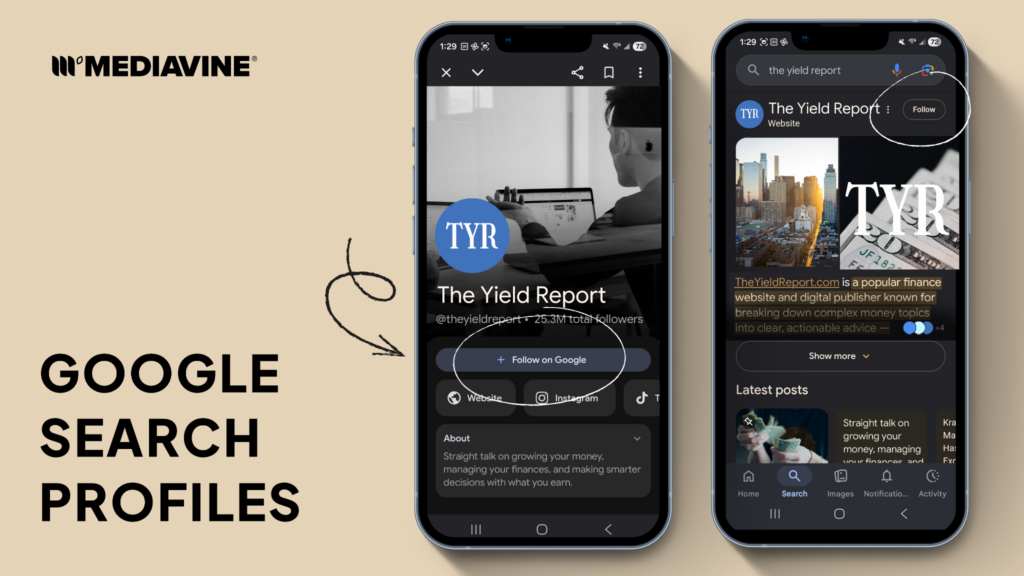
On June 4, Google introduced Search Profiles, a new feature that gives publishers a dedicated presence within Google Search. These profiles allow publishers to showcase their latest articles, videos, social media content, and website links in a centralized location, making it easier for readers to discover and engage with their content.
One of the most notable aspects of Search Profiles is the ability for users to follow publishers directly from the profile page. While Google has not detailed the full impact of this feature, follows may help strengthen a publisher’s visibility across Google’s ecosystem, including Google Discover.
For publishers unfamiliar with Discover, it is Google’s personalized content feed that appears within the Google app and on some Android devices. Rather than relying on traditional search queries, Discover surfaces content based on a user’s interests and engagement patterns. For many independent publishers, Discover has become a significant source of traffic and audience growth.
Taken together, these updates suggest that Google is continuing to invest in helping users build direct relationships with trusted creators and publishers. As search evolves beyond individual pages and keywords, establishing a recognizable brand and fostering audience loyalty may become increasingly important components of long-term growth.
So What Does It Do, Exactly?
Once you claim your profile, it pulls in your latest content from connected platforms and updates automatically. It shows up in Google Search results, in your Knowledge Panel (the information box Google surfaces for recognized brands and people), through Discover, and at a shareable direct link.
Right now, Search Profiles are available in the U.S. to publishers with at least 100,000 followers on YouTube, Instagram, or X, or 300,000 on TikTok. Google has said it plans to expand access and add more features soon.
The Big Picture
Google is no longer just ranking pages. It is deciding which publishers to trust.
The follow feature is the clearest proof of that. When someone follows your profile, your content shows up in their Discover feed more reliably. Google is building a direct line between publishers and their audiences within its own products by recognizing brands, not just URLs.
Here’s Where to Put Your Energy

Keep creating your high-quality content, growing your audience, and building your brand. If you’re eligible, claim your Search Profile and make sure your connected platforms are up to date.
This won’t change your revenue numbers this week, but more control over how you appear in Google Search and Discover is a net positive. The publishers who treat their brand as an asset right now will be better positioned as search keeps evolving.
We’re watching how adoption plays out and will keep you posted when there’s more to share.
Frequently Asked Questions
What is Google Search Profiles?
Google Search Profiles is a dedicated page inside Google Search where publishers can display their latest articles, videos, social posts, and website links in one place. Readers can follow a publisher directly from their profile, which makes that publisher’s content more likely to appear in their Google Discover feed. Think of it as a hub for your brand inside Google Search.
It gives publishers a more structured presence within Google’s ecosystem, rather than relying only on individual pages to surface in results.
What is Google Discover?
Google Discover is the feed of recommended content that appears on the Google app home screen. It surfaces articles and videos based on a reader’s interests and browsing behavior, without them having to search for anything. It is one of the most significant sources of referral traffic for independent publishers, meaning it sends a meaningful share of readers to sites like yours.
Unlike traditional search, Discover is proactive rather than reactive, meaning content is pushed to users based on predictive relevance. This makes it especially important for publishers focused on evergreen content, lifestyle topics, and audience engagement.
Does this affect my search rankings or traffic right now?
Not directly. Search Profiles do not change how your pages rank in search results today. What they do is give you more visibility and control over how your brand appears across Google Search and Discover, and make it easier for readers to follow and find your content consistently.
Over time, this can indirectly influence performance by improving brand recognition and increasing repeat exposure, but it is not a ranking factor in itself.
Is this available to all Mediavine publishers?
Not yet. Search Profiles are currently available in the U.S. to publishers with an established following on at least one major platform. The current thresholds are 100,000 followers on YouTube, Instagram, or X, or 300,000 on TikTok. Google has said it plans to expand access in the coming months.
This phased rollout means eligibility is still limited while Google tests adoption and usage patterns. Broader availability will likely come as they refine the product and expand to more creator segments.
I don’t meet the follower thresholds. Do I need to do anything?
Not right now. Keep focusing on building high-quality content and growing your audience. As Google expands access, more publishers will become eligible. We will share updates as that happens.
In the meantime, there is no manual setup or workaround required, and being prepared with strong connected social and content channels will make onboarding smoother once eligibility opens up.
I meet the requirements. How do I claim my profile?
You can access your Search Profile through your Knowledge Panel in Google Search, by tapping your name in Google Discover, or through a direct profile URL. Make sure your connected platforms are up to date before claiming, so your profile pulls in accurate, current content.
It’s also a good idea to review how your brand appears across connected accounts first, since those inputs will largely determine what surfaces in your profile automatically.
Will this help my RPM or ad revenue?
Not directly or immediately. Search Profiles are a brand visibility and audience growth tool, not an ad optimization feature. That said, publishers with stronger brand recognition and more engaged audiences tend to perform better over the long term as search continues to evolve. More consistent visibility in Discover can contribute to traffic growth, which does affect revenue over time.
Is Mediavine doing anything in response to this update?
We are monitoring adoption and performance data as Search Profiles roll out more broadly. Our recommendation to publishers stays consistent: invest in high-quality content, audience development, and brand building. Those are the inputs that matter most as search continues to shift toward recognizing trusted publishers rather than just ranking individual pages.
We’re also watching how these profiles influence distribution in Discover and whether they change how audiences engage with publisher brands over time, so we can adjust guidance as the feature matures.
About the author

Share this page

The Mediavine Difference
You build content that defines industries.
We build the monetization that powers it.