

- SEO
Cornerstone Content: The Key(stone) to Your Content Strategy
•
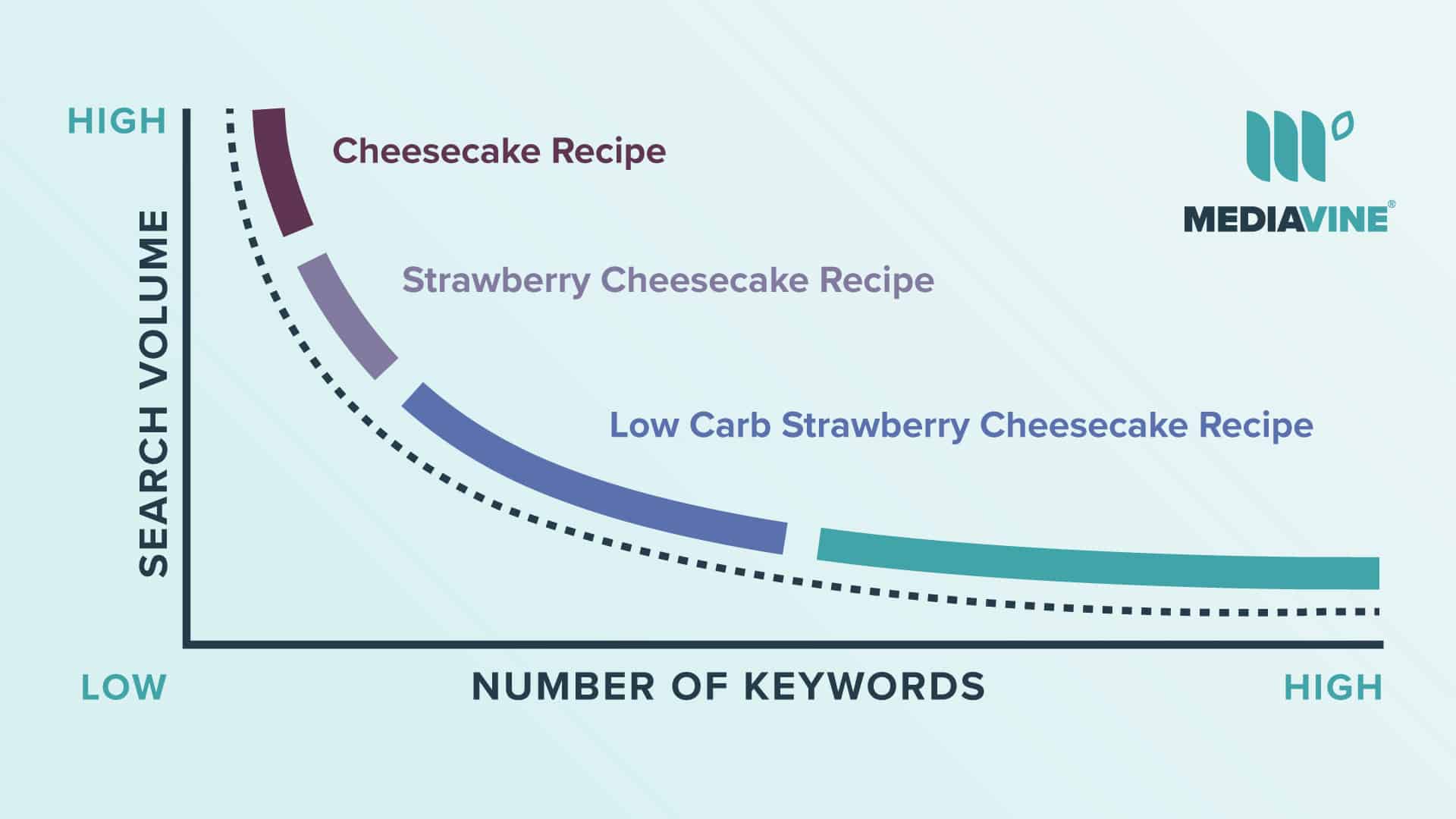 Just like a physical cornerstone of a building, cornerstone content is a vital component of any SEO strategy. But here’s the thing:
I
Just like a physical cornerstone of a building, cornerstone content is a vital component of any SEO strategy. But here’s the thing:
I 
How Eric Looks at Cornerstone Content
I think of cornerstone content as any competitive term that you’re attempting to rank on, and can write multiple posts about. You can almost think of your cornerstone content as categories — but it doesn’t have to be! It can be a category, a blog post, a tag or really any kind of landing page. The single most important concept behind cornerstone content is that it has supporting articles, and in turn, those supporting articles link to the cornerstone content. It’s also crucial that your cornerstone constitutes great content, in and of itself. For example, if your cornerstone is a category, make sure your theme allows you to build real content on the category pages. Another shameless plug alert: Trellis will make sure you can build great-looking category landing pages with lots of content, ensuring exactly these kinds of contributions to your content strategy. Bottom line? Your cornerstone content has to be worthwhile content in order to rank on any terms. But another key to utilizing cornerstone content is how it fits within your site structure. (I’m going to cover site structure in greater detail in a future blog post.) Ideally, cornerstone content should be one click away from the home page.
But in my world, you can have lots of cornerstone content. It’s possible that over time, you may find you have more cornerstones than would be realistic to link to from the homepage.
To illustrate this, I’ll bring back the cheesecake recipe SEO example from when we discussed what is a keyword.
Let’s pretend in this world, cheesecake recipes is our cornerstone. You want to make sure to link from the homepage using the anchor text, “cheesecake recipes.”
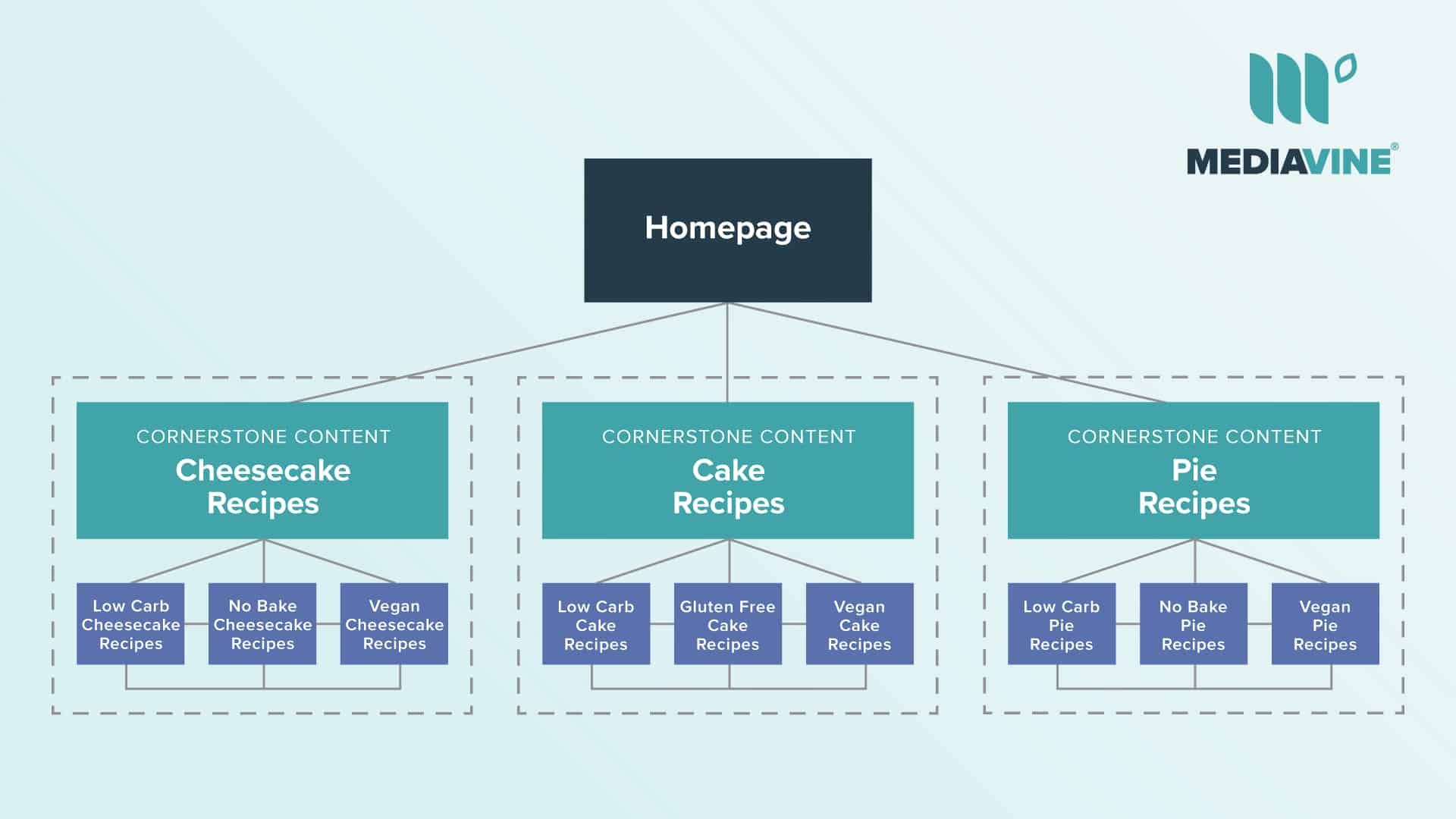
It’s okay if you also have cornerstone content around other topics, like cake and pie. Just link to your best ones and make a cornerstone of cornerstones, adding layers of cornerstone content below each one. (More on this concept later.)
You’ll want to make sure you link to the cornerstone content on the anchor text that your cornerstone is targeting.
The point is to link to your cornerstone(s) from your homepage whenever you can, like this graph below.
Ideally, cornerstone content should be one click away from the home page.
But in my world, you can have lots of cornerstone content. It’s possible that over time, you may find you have more cornerstones than would be realistic to link to from the homepage.
To illustrate this, I’ll bring back the cheesecake recipe SEO example from when we discussed what is a keyword.
Let’s pretend in this world, cheesecake recipes is our cornerstone. You want to make sure to link from the homepage using the anchor text, “cheesecake recipes.”
It’s okay if you also have cornerstone content around other topics, like cake and pie. Just link to your best ones and make a cornerstone of cornerstones, adding layers of cornerstone content below each one. (More on this concept later.)
You’ll want to make sure you link to the cornerstone content on the anchor text that your cornerstone is targeting.
The point is to link to your cornerstone(s) from your homepage whenever you can, like this graph below.
Supporting Your Cornerstone Content
Again, the “cornerstone” metaphor is kind of the worst. If it’s a cornerstone, then it should be supporting the rest of the content around it, not the reverse, right? Wrong. Let’s pretend the SEO experts who made up this lame term properly named it keystone content. Way better metaphor. A keystone, for all you non-architectural nerds, is the top stone of an arch. Think of all the supporting bricks of the arch as your supporting content. And buildings can have multiple arches! Keystone makes so much more sense, but until they put me in charge of SEO naming conventions, back to business: The idea is that you’re going to write a ton of long tail keyword-driven content to support the cornerstone content. Using our cheesecake example — much tastier than bricks — you’d want to write a bunch of different cheesecake recipes: strawberry cheesecake, blueberry cheesecake, low carb cheesecake, etc. As I mentioned above, the key (no pun intended) is that this long tail content links back up to the cornerstone. They can link to each other, which is great for SEO as well, but linking back to the cornerstone is most critical. After all, that was your goal: The cornerstone is getting support, or internal links, from the long tail keywords. The cornerstone can link to some of your top posts based around long-tail keywords as well. The relationship can go both ways as long as your cornerstone always gets the link. But wait, in our cheesecake example, we said that the keyphrase was “low carb strawberry cheesecake recipe.” Well, if you find that either “low carb cheesecake” or “strawberry cheesecake” can support a bunch of long-tail related content themselves, you have yourself a cornerstone of cornerstones. Or as we’re calling it in this graph, level two cornerstone content. Suddenly, you could structure it in layers, like so: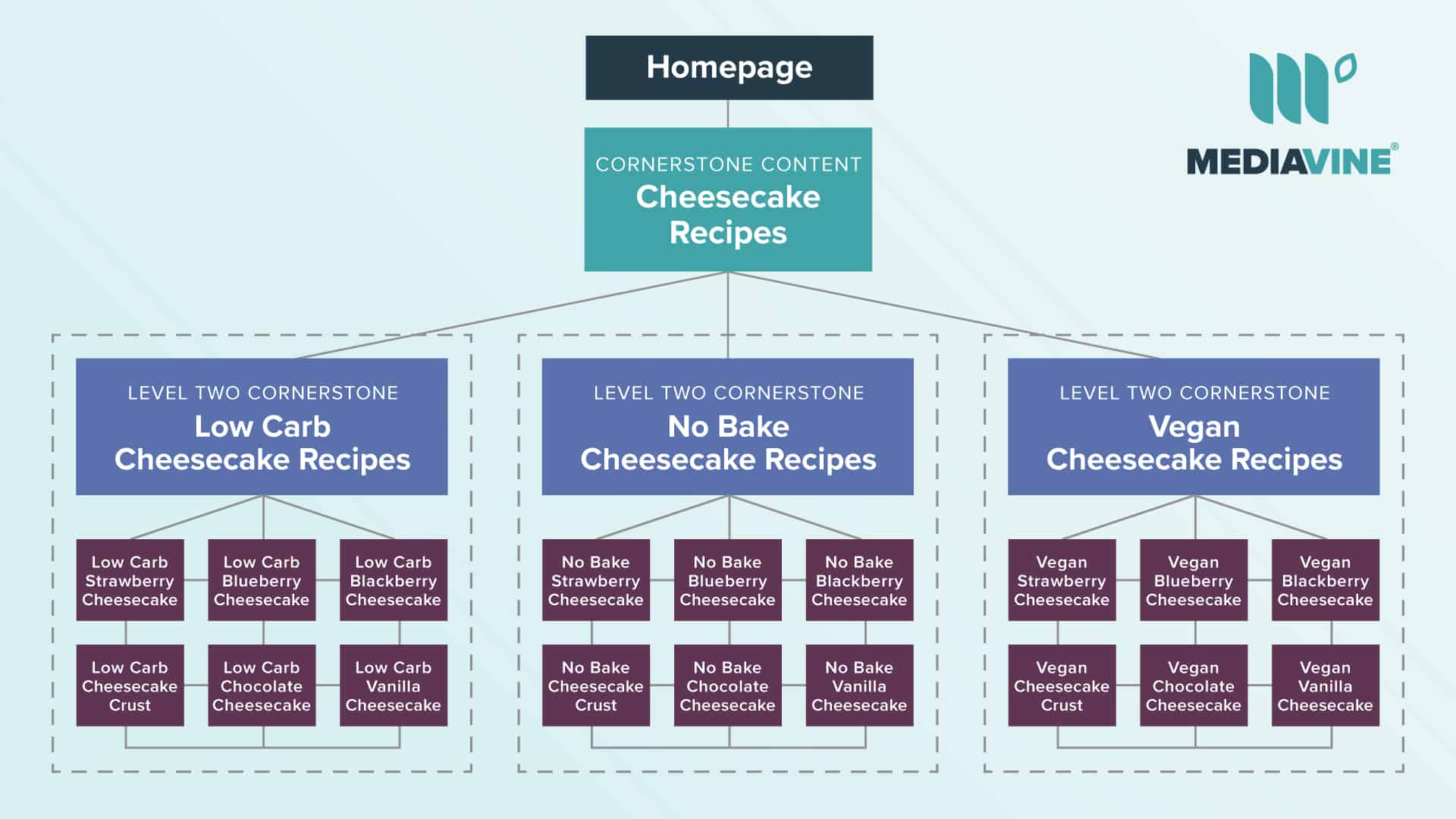 And you would do the same thing with your other cornerstone topics — in this example, “cake recipes” and “pie recipes.” (Make sure you check for stop words.)
I love this concept because it works. It lends itself perfectly to the related content strategy that The Hollywood Gossip and Mediavine are built upon, and evolves seamlessly with time.
We’ll have a lot more to share soon regarding link structure, finding related content, how to pick your keywords for cornerstone content, keyword prominence, how to optimize content for SEO and other topics.
Thanks for reading and happy keystone building.
P.S. We made some printable versions of the cornerstone content map. Download this example map to hang on the wall and reference, as well as this blank cornerstone content map to fill out with your own content ideas.
And you would do the same thing with your other cornerstone topics — in this example, “cake recipes” and “pie recipes.” (Make sure you check for stop words.)
I love this concept because it works. It lends itself perfectly to the related content strategy that The Hollywood Gossip and Mediavine are built upon, and evolves seamlessly with time.
We’ll have a lot more to share soon regarding link structure, finding related content, how to pick your keywords for cornerstone content, keyword prominence, how to optimize content for SEO and other topics.
Thanks for reading and happy keystone building.
P.S. We made some printable versions of the cornerstone content map. Download this example map to hang on the wall and reference, as well as this blank cornerstone content map to fill out with your own content ideas. About the author

Share this page