

- Advertising
What to Expect From eCPMs in Q1 (And How to Plan for It)
4 min read
•
•
Q1 has a reputation. For many publishers, it’s the quarter where eCPMs cool off, dashboards look less exciting, and questions start popping up fast. Is something wrong? Did I miss something? Should I be worried?
Short answer: probably not. Q1 behaves the way it does for reasons that have very little to do with your content — and a lot to do with how advertising budgets reset at the start of the year.
Let’s walk through what’s actually happening in Q1, why it’s different from Q4, and how publishers can plan around it instead of stressing through it.

Why Q1 Is Typically Softer for eCPMs
At the start of the year, advertisers hit the reset button. Budgets are refreshed, strategies recalibrated, and spending becomes more cautious as brands assess their performance from the previous year and decide where to allocate their dollars next. That usually means fewer advertisers competing aggressively for inventory in January and early February.
Less competition = lower average eCPMs.
This isn’t a reflection of content quality or site performance. It’s a normal outcome of how annual advertising budgets work.
Lower eCPMs in Q1 don’t mean demand disappears. It means advertisers are easing back into the market after budgets reset.
Brad Hagmann
The Q1 Timeline
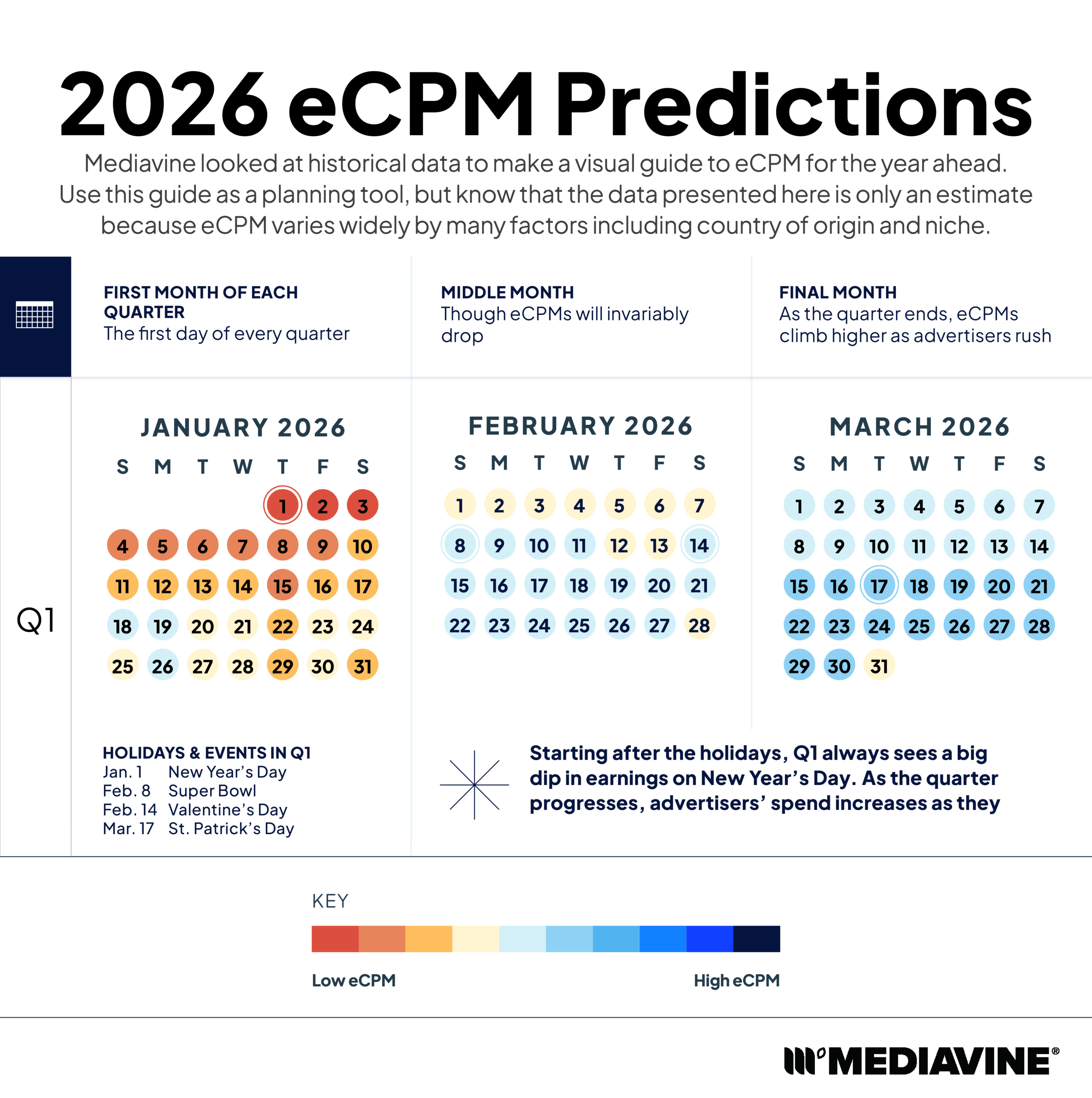
While no two years are identical, Q1 tends to follow a familiar rhythm:
- January: Often the softest period of the quarter as budgets reset and campaigns ramp slowly
- February: Gradual improvement as advertisers re-enter the market and test new strategies
- March: Momentum builds as the quarter progresses, and spend becomes more intentional
By the end of March, many advertisers are no longer easing in; they’re executing.
Not All Verticals Experience Q1 the Same Way
One important thing to remember: seasonality is not universal. While Q1 is softer overall, some verticals perform well — or even peak — early in the year. For example:
- Health and fitness often see strong demand tied to New Year resolutions
- Education and self-improvement can benefit from goal-setting behavior
- Retail, on the other hand, usually feels the post-holiday pullback more acutely
Context matters. Comparing your site to a broad average without accounting for your niche can be misleading.
Economic Conditions Can Influence the Floor — Not the Pattern
The broader economy can absolutely influence how strong or weak Q1 feels. When advertisers are cautious, budgets tighten, and eCPM recovery may be slower. When confidence is higher, demand can rebound more quickly. What changes is the intensity, not the structure.
The exact numbers vary. The seasonal pattern doesn’t.
How Publishers Can Work With Q1 Instead of Fighting It
Q1 isn’t the quarter to chase perfection. It is a quarter to plan smart.
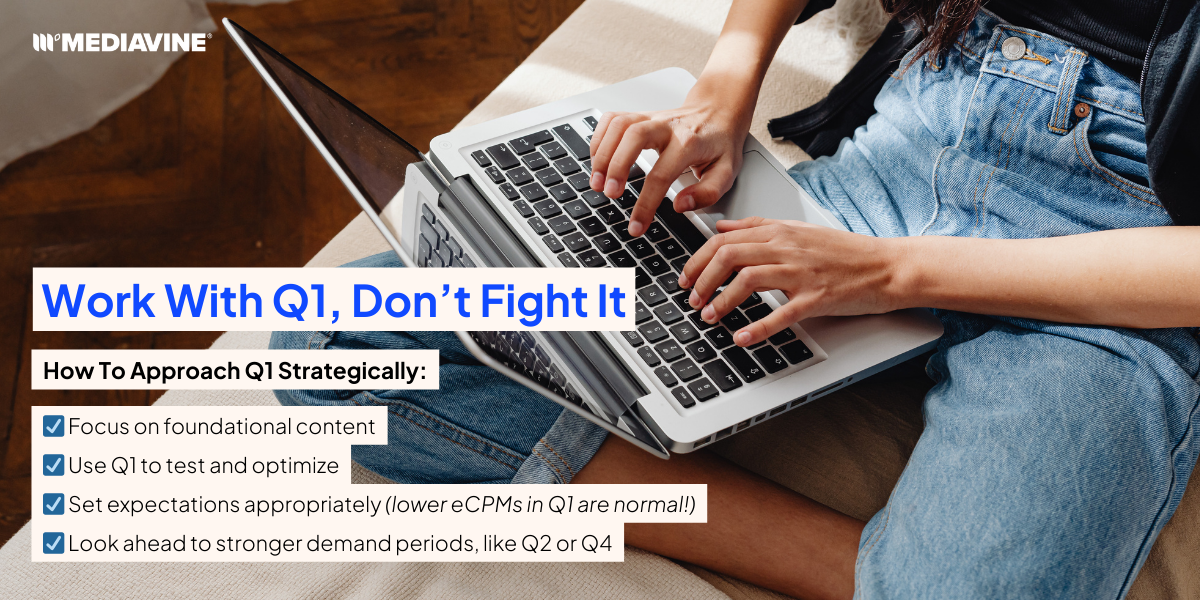
Here’s how to approach it strategically:
- Focus on foundational content. This is a good time to publish evergreen content that compounds over time, rather than relying on short-term revenue spikes.
- Use Q1 to test and optimize. With slightly less competitive pressure, Q1 can be an ideal time to experiment with content formats, refresh older posts, or fine-tune monetization setups.
- Set expectations appropriately. Lower eCPMs in Q1 are normal. Knowing that upfront helps prevent unnecessary changes driven by short-term performance anxiety.
- Look ahead to stronger demand periods. Planning now for Q2 and Q4 allows you to take full advantage when advertiser competition ramps back up.
Q1 in Context
Q1 is part of a larger annual cycle; not a verdict on your site’s health. Advertising demand fluctuates throughout the year. Understanding those patterns makes it easier to ride the slower periods calmly and capitalize on the stronger ones confidently.
If you want a deeper breakdown of why these seasonal shifts happen year after year, start with our guide to why eCPMs rise and fall throughout the year. And if you’re looking for a practical way to visualize how those patterns often play out, our annual Best eCPM Days calendar applies those trends to a specific year.
Because while Q1 may be quieter…
It’s also where smart planning starts paying off.
About the author

Share this page

The Mediavine Difference
You build content that defines industries.
We build the monetization that powers it.